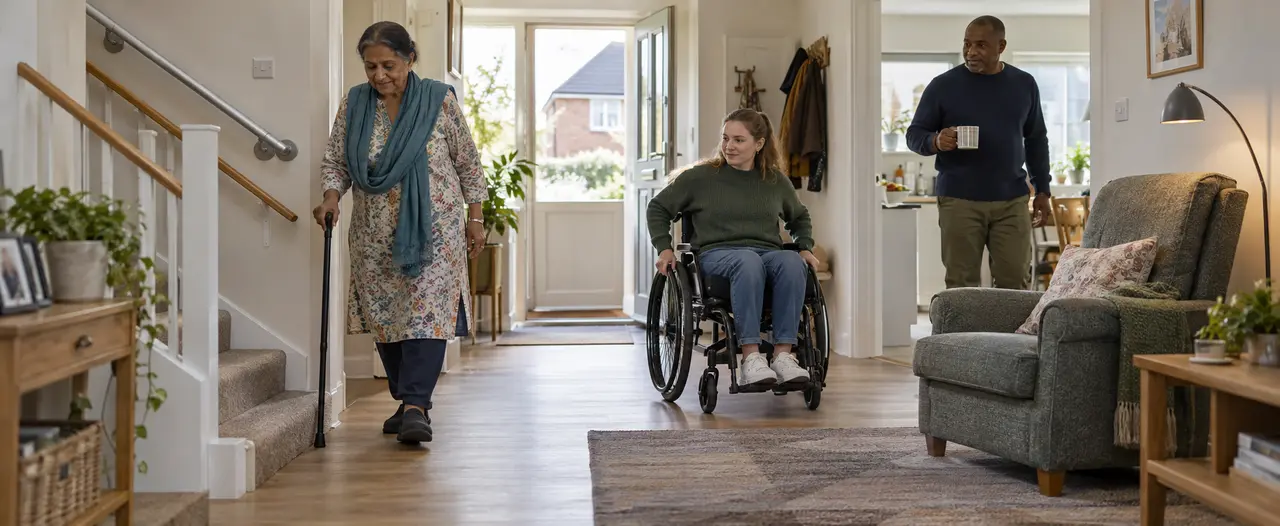
Clear routes without making the home feel bare
Making room to move around at home
A home can become difficult one small obstruction at a time. Furniture narrows a route, a rug catches a walking frame and a heavy fire door is tiring to open. The useful changes depend on how the person moves and which rooms they need to reach, not on making every room look the same. Changes should keep the home comfortable and recognisable while removing the points that repeatedly cause delay, strain or risk.
Watch the routes used every day
Follow the journey from bed to bathroom, chair to kitchen and front door to living room. Measure tight points with the walking aid or wheelchair in use. A doorway may be wide enough straight on but impossible to approach from a narrow hall. Notice where the person has to turn, reverse or carry something. These observations are more useful than measuring each room in isolation.
Furniture can help as well as hinder
A solid chair in the right place can provide a rest point. A table edge should not be used as a handrail, because it may move or tip. Repositioning furniture can create a clearer route while keeping frequently used items within reach.
Avoid leaving large empty areas without a stable support if the person relies on touching furniture for balance. The aim is predictable movement, with no surprise obstacles.
Thresholds, flooring and internal doors
Raised thresholds can stop small castors and cause trips. Some can be reduced or replaced, though differences in floor level and water protection at external doors must be respected.
Loose mats and curled carpet edges need dealing with. Highly polished floors may produce glare as well as becoming slippery. Heavy door closers can be adjusted only if fire safety is preserved; never wedge a fire door open as a permanent solution.
Wheelchairs and turning space
Wheelchairs differ in width, length and turning behaviour. Powered chairs may need more room and somewhere to charge safely. Measure the actual chair, including footplates, instead of relying on a general figure.
Check access beside the bed, toilet and favourite chair, not just through the doorway. If future needs are likely to change, a little extra space now may avoid rebuilding later.
Controls and everyday storage
Handles, sockets, switches and cupboards should be reachable from the position in which they are used. D-shaped cupboard handles are often easier to grip than small knobs. Pull-out storage can bring items forward, but it must not block the route when open. Frequently used objects are generally safer between knee and shoulder height. Keep medicines, cleaning products and sharp objects secure where that is needed.
An assessment can join the pieces together
It is common to fix one doorway and then find the next corner still prevents access. An occupational therapist or experienced access specialist can look at transfers, reach, strength and the connected route through the home.
Ask the assessor to look at the busiest times of day. A hallway that works when empty may become blocked by coats, bags or a parked walking frame. If a carer assists with transfers, include the space that person needs as well. Marking a simple route plan can reveal repeated pinch points and helps builders understand why one small dimension matters.
After making changes, use the route for a few days before fixing every piece of furniture permanently. A shelf, rail or chair sometimes needs moving once the real pattern of use becomes clear.